2026-09-23 · Cole Bennett
Why Texas Soil Causes So Many Slab Leaks
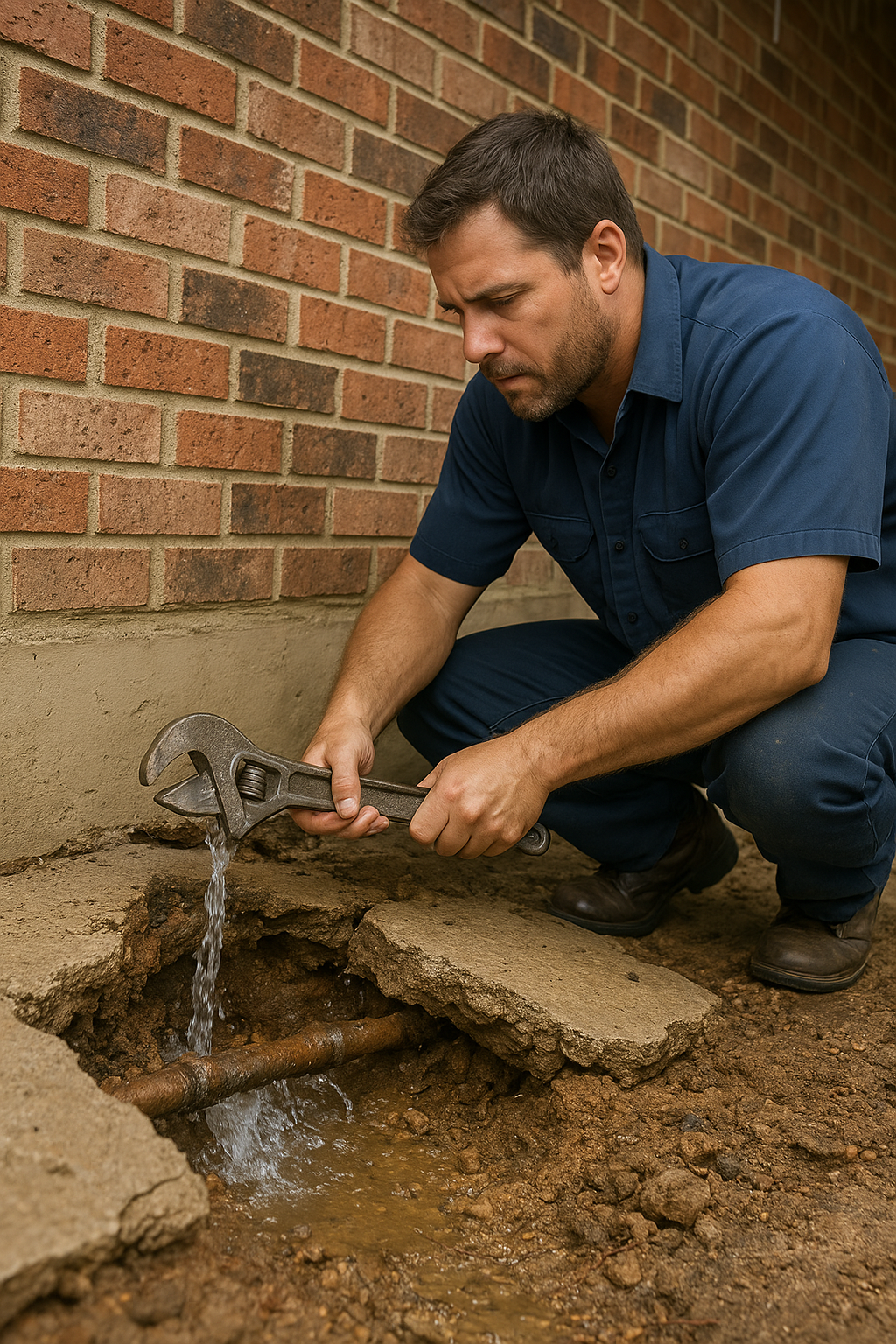
Expansive clay soils common across Harris County shift 4 to 8 inches vertically during wet and dry cycles, directly fracturing copper and PVC lines under concrete slabs in Houston homes.
Clay Composition and Moisture Swings
Houston sits on Beaumont and Lake Charles clay formations that absorb water rapidly during heavy summer storms then shrink in the mild winter months when rainfall drops. These soils exert upward pressure exceeding 5,000 pounds per square foot when saturated, lifting slab sections unevenly and bending rigid supply lines at joints. Homeowners in the Heights and Montrose often see leaks where 1970s-era copper pipes meet newer additions because the older lines lack flexibility. The same clay layer runs under River Oaks and Midtown, where mature live oaks pull moisture from deeper soil horizons and create localized drying zones that crack pipes within 10 to 15 feet of tree roots. Katy and Sugar Land share identical soil profiles, so the pattern repeats in newer subdivisions built on filled lots that still contain pockets of native clay.
Seasonal Rainfall Patterns in Harris County
Subtropical humidity delivers 40 to 50 inches of rain annually, concentrated in spring and fall downpours that saturate the top 3 feet of soil within hours. After these events, the clay expands and pushes slabs upward 2 to 4 inches in low-lying blocks of Downtown and Midtown. During the occasional summer drought stretches of 30 to 45 days, the soil contracts and slabs settle, shearing pipes at 90-degree elbows. Pearland experiences the same cycle but with slightly better drainage from sandy loam pockets, yet slab leaks still appear near foundation perimeters where downspouts empty directly onto clay. These repeated movements fatigue solder joints and glue bonds until pinhole leaks form, often 6 to 12 inches inside the slab edge.
Older Housing Stock and Pipe Vulnerability
Many homes in the Heights and Montrose were built between 1920 and 1960 with galvanized or early copper lines laid directly on grade before modern sleeving practices. When the clay beneath them moves, these rigid pipes have no expansion loops and fail at threaded connections or soldered elbows. Newer construction in Sugar Land and Katy uses PEX or CPVC, yet the same soil pressure still pinches lines against rebar or pier caps. Slab leak detection becomes essential once monthly water bills rise $30 to $80 without visible interior moisture. Under-slab pipe repair crews frequently encounter roots from nearby oaks that have followed the moisture trail to the leak itself, further complicating access in tight crawl spaces or through 4-inch core holes.
Monitoring and Early Intervention Steps
Track utility bills monthly and note any unexplained 20 percent increase that coincides with heavy rain or extended dry spells. Check exterior hose bibs and interior valves for pressure drops below 45 psi, which often signals a downstream slab leak. Homeowners in River Oaks and the Heights benefit from installing soil moisture sensors 12 inches from the foundation to alert when clay moisture content swings beyond 15 percent. When signs appear, slab leak detection using acoustic or camera methods pinpoints the exact joint before excavation. Related reading on common indicators appears in the article Signs of a Slab Leak: What Texas Homeowners Should Watch For. For cost ranges typical in Harris County, review How Much Does Slab Leak Repair Cost in Texas?. If the line runs under finished flooring, slab leak re-route options avoid major concrete removal in many Montrose and Midtown properties.