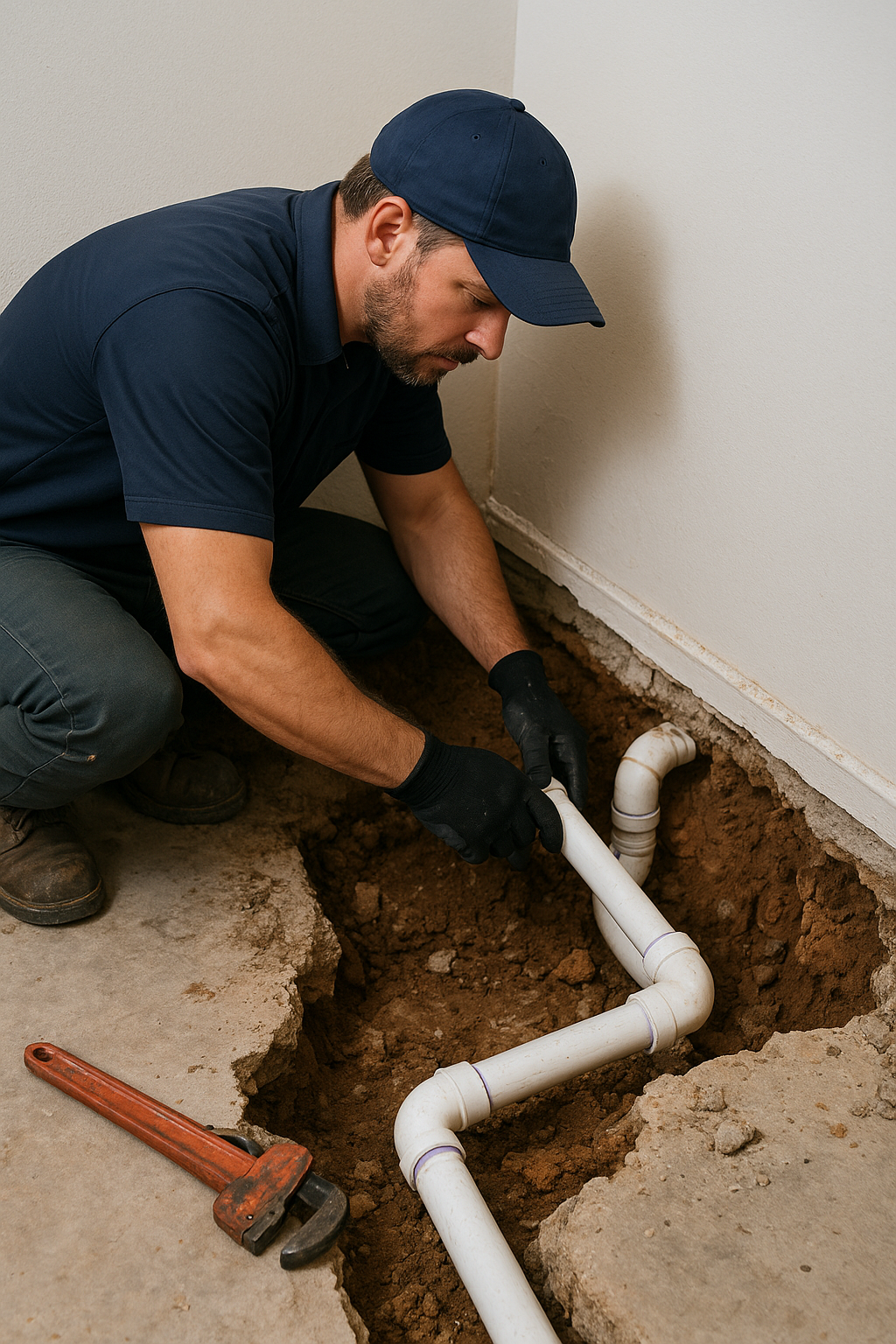
Houston's subtropical climate brings heavy summer rains and shifting clay soils across Harris County that put constant pressure on older copper and galvanized lines under slabs. Homes built before 1980 in the Heights and Montrose often have brittle supply lines that corrode from decades of soil movement and poor drainage around foundations. Re-routing moves new PEX or copper lines through walls or attics to eliminate the slab section entirely, preventing repeated leaks that would otherwise require jackhammering.
In River Oaks and Midtown properties the concrete is frequently post-tensioned, making traditional break-and-repair risky and expensive. Re-routing lets technicians fish lines through existing chases or exterior walls while preserving the structural cables. Edge cases include tight clearances in Downtown high-rises converted to condos and limited attic access in single-story bungalows near Minute Maid Park, both of which dictate whether a full re-route or partial bypass is feasible.
Local building practices in Katy and Sugar Land require new lines to meet current IRC standards for support and shut-off placement when they exit the slab. Technicians must also account for high water pressure from the city supply that can stress new fittings if not properly anchored. Proper re-routing includes sleeving penetrations, installing accessible valves, and pressure-testing the new run before drywall is closed.
Technician insight
In Houston the thing that catches most people out with slab leak re-route is the clay soil movement in Harris County that keeps shifting the old slab lines even after one leak is fixed. Homes in the Heights and River Oaks from the 1950s-70s have copper that work-hardens and cracks every few years, so rerouting through the attic before another break saves the slab. Never assume the original plumber ran straight lines under the concrete.
Heights Bungalow Kitchen Leak
A 1965 Heights home had recurring kitchen slab leaks traced to corroded copper under the breakfast area. Soil movement from heavy spring rains had stressed the line. We mapped the run, pulled new PEX through the attic, and tied it to the existing manifold. The slab stayed intact and the homeowner avoided breaking tile that matched the rest of the 60-year-old floor.
Slab Leak Re-Route Services We Offer
✓Kitchen Supply Line Re-Route
Moves hot and cold lines from under the slab to wall or attic routes, eliminating future kitchen slab leaks common in 1960s Heights homes.
✓Bathroom Fixture Re-Route
Reroutes tub, shower, and vanity supply lines through exterior walls to bypass corroded slab sections typical in River Oaks and Montrose.
✓Whole-House Main Re-Route
Brings the primary water main above grade and into the structure, protecting homes in Midtown and Downtown from widespread slab damage.
✓Outdoor Hose Bibb Re-Route
Relocates exterior spigots from slab penetrations to above-grade feeds, reducing leak risk in flood-prone areas near the Houston Zoo.
✓Laundry Room Supply Re-Route
Moves washer and utility sink lines through interior walls in older Pearland and Sugar Land homes where slab access is limited.
Slab Leak Re-Route Cost in Texas
| Service | Typical Range | What Affects It |
|---|---|---|
| Single Fixture Re-Route | $1,200–$2,400 | Higher in two-story Heights homes with limited attic access |
| Kitchen and Bath Combo | $2,800–$4,500 | Varies with wall access in Montrose bungalows |
| Whole-House Main Re-Route | $3,500–$6,000 | Price rises with concrete restoration needs in River Oaks |
| Outdoor Spigot Re-Route | $650–$1,100 | Lower in single-story Midtown homes |
Ranges are typical for Texas and confirmed with an exact written quote before any work starts.
How it works
- 1
Leak Location and Mapping
Technicians isolate the leaking section using acoustic and pressure testing, then trace the line through slab maps of the specific neighborhood home.
- 2
Route Planning
New path is planned through walls, attics, or exterior soffits while avoiding post-tension cables common in River Oaks and Heights properties.
- 3
New Line Installation
PEX or copper is run, secured, and sleeved at all penetrations before tying into existing fixtures.
- 4
Testing and Restoration
Full pressure test confirms integrity, shut-off valves are labeled, and access points are left for future service.
Pricing
Cost depends on number of fixtures, home age, and whether attic or exterior routing is required.